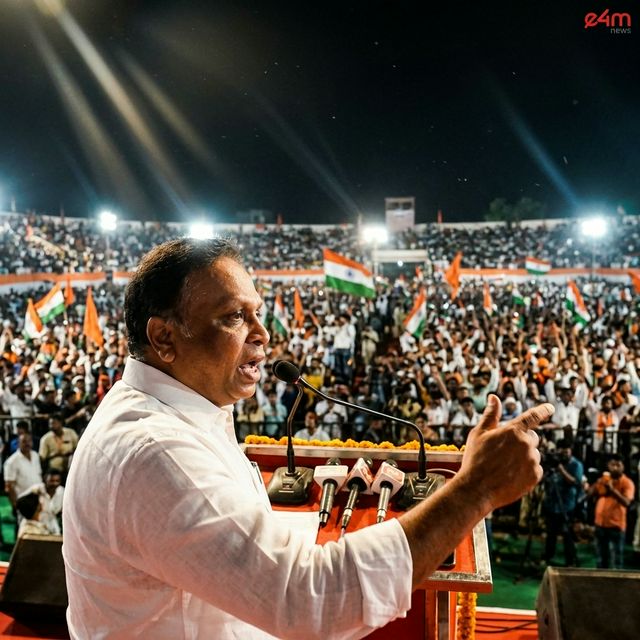
From the mill-worker chawls of Mumbai to the corridors of Mantralaya — the complete life and career of Advocate Ashish Babaji Shelar.
Ashish Babaji Shelar was born on 3 October 1972 in Mumbai, into a Marathi Hindu family with roots in the Konkan heartland. His family originally hails from Sindhudurg district — the southernmost coastal district of Maharashtra, bordered by the Arabian Sea to the west and the Sahyadri mountain range to the east. This is the lush, rain-soaked belt that has historically supplied Mumbai with generations of migrant workers, traders, clerks, and professionals who became the backbone of the city's administrative and commercial class.
Like millions of Konkan families who migrated to Mumbai across the 20th century, the Shelars were part of a broader socioeconomic pattern — families leaving agrarian coastal villages in search of opportunity in the metropolis, carrying with them the cultural values of community, religious observance, and educational aspiration that define Konkan Marathi society.
Young Ashish grew up in Mumbai's chawl system — the communal housing tenements that defined the social fabric of the city's mill-worker class in south-central Mumbai. The chawl, with its shared corridors, communal taps, close-knit community dynamics, and modest living conditions, was simultaneously a school of civic life and a window into the daily struggles of working-class citizens. Festivals were celebrated collectively, disputes were resolved communally, and political awareness was an ambient condition of shared living rather than an acquired interest.
This upbringing instilled a visceral understanding of urban India's most pressing concerns: housing shortages, water supply irregularities, overcrowded public transport, inadequate sanitation, and the constant negotiation between citizens and civic authorities that defines life in a megacity. These were not abstract policy issues for Shelar — they were the lived experience of his formative years.
The family eventually settled in Bandra West — the very constituency Shelar would later come to represent in the Maharashtra Legislative Assembly for three consecutive terms. The transition from chawl life to Bandra's diverse, cosmopolitan environment exposed him to the full spectrum of Mumbai's social tapestry: from fishing communities and old Catholic families to film industry residents and migrant workers. These formative years shaped a lifelong, personal connection to the civic concerns of ordinary citizens — housing, water, transport, healthcare, and public services.
| Year | Qualification | Institution |
|---|---|---|
| 1987 | SSC | DGT High School |
| 1989 | HSC | Kirti College |
| 1992 | B.Sc. | Parle College, Vile Parle |
| 1995 | LLB | G.J. Advani Law College, University of Mumbai |
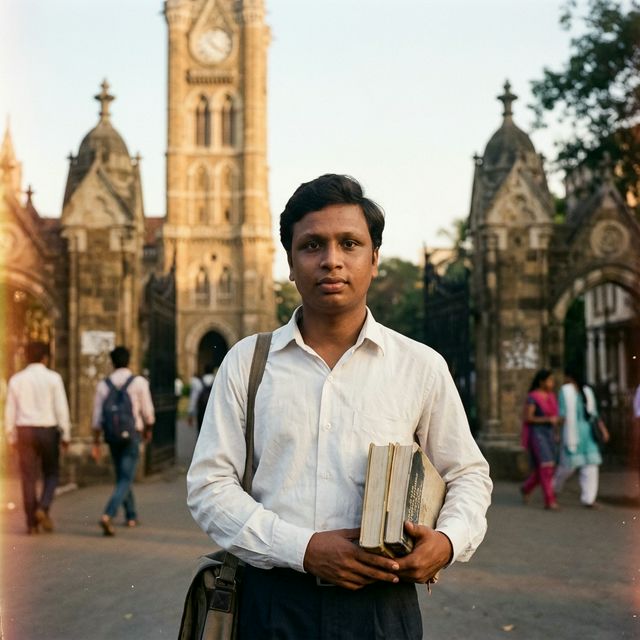
The educational trajectory is notable for its deliberate breadth. A science graduate who chose law — a combination that reflects both analytical rigour and a pragmatic orientation toward public systems. The B.Sc. at Parle College provided a foundation in structured thinking; the LLB at G.J. Advani Law College under the University of Mumbai provided the tools of institutional engagement.
A trained advocate by profession, Shelar's legal education deeply informs his approach to governance. His emphasis on drafting precision, legislative scrutiny, procedural accountability, and institutional frameworks can be traced directly to his legal training. In the Maharashtra Legislative Assembly, this translates to a distinctive style: data-driven questions, structured policy advocacy, and an insistence on government resolution specificity that colleagues and observers have noted throughout his three terms.
It is worth noting that Shelar completed his education during the turbulent early 1990s in Mumbai — the period of communal tensions, the textile mill closures, and the city's painful transition from an industrial economy to a services-driven metropolis. The formative experience of studying law while the city's social fabric was under pressure shaped a worldview where institutional stability and rule of law are not abstractions but urgent necessities.
Shelar's political awakening began with the Rashtriya Swayamsevak Sangh (RSS) — the world's largest volunteer organization, founded in 1925 by Dr. K.B. Hedgewar. As a young volunteer in the 1980s, Shelar participated in the daily shakhas (morning gatherings) that are the organizational bedrock of the Sangh. The RSS emphasis on disciplined cadre-building, physical fitness, ideological training in Hindutva philosophy, and selfless national service ("nation first, self last") provided the foundational framework for his entire political career.
The significance of this RSS grounding cannot be overstated. Unlike politicians who enter party politics through family connections, business networks, or celebrity status, Shelar's entry was through the most systematic, ground-up organizational pathway available in Indian politics. The RSS instils in its volunteers a particular combination of organizational discipline, ideological commitment, personal austerity, and hierarchical respect that shapes leadership in distinctive ways.
From the RSS, he transitioned to active student politics through the Akhil Bharatiya Vidyarthi Parishad (ABVP), the RSS-affiliated student organization and one of the largest student movements in the world. Within ABVP, Shelar rapidly rose through the ranks to become Mumbai Secretary — leading student mobilization campaigns across multiple colleges, organizing campus outreach programmes, coordinating with other Sangh affiliate organizations, and driving ABVP's expansion across Mumbai's western suburbs. This period taught him the fundamentals of electoral organization: voter identification, booth management, ground-level campaign logistics, and the art of converting ideological sympathy into organized political support.
The next step was the Bharatiya Janata Yuva Morcha (BJYM), the BJP's official youth wing. Shelar became President of the Mumbai unit of BJYM, focusing on expanding the BJP's base among college students, young professionals, and first-generation voters in key constituencies including Bandra, Khar, Santacruz, and Vile Parle. Under his BJYM leadership, the BJP's youth engagement in Mumbai's western suburbs was systematically professionalized — moving from ad hoc rally mobilization to structured, year-round organizational engagement.
This progression — RSS → ABVP → BJYM → BJP — represents a decades-long arc of organizational commitment, ground-level mobilization, and ideological consistency that is remarkable even by Sangh Parivar standards. Few contemporary leaders in Maharashtra politics can claim such a complete, systematic trajectory through every tier of the organizational ecosystem. Each stage built institutional knowledge, widened networks, and deepened the organizational instincts that would later prove decisive in electoral politics and party management.
Shelar is married to Advocate Pratima Shelar (née Dalvi), herself a practising advocate with an independent legal career. The couple maintains a deliberately private, family-oriented personal life alongside one of Mumbai's most visible political careers — a balance that Shelar has consciously preserved throughout his decades in public service. Unlike many political families in Maharashtra where spouses and children actively participate in electoral politics, the Shelar household has maintained a clear separation between public duty and private life.
Beyond politics and governance, Shelar is known for his deep personal passion for literature, visual arts, performing arts, Bollywood cinema, and classical and contemporary music. His engagement with Mumbai's cultural ecosystem is not performative or electoral — it predates his ministerial portfolio and reflects genuine intellectual and aesthetic interests that colleagues and cultural figures have consistently attested to.
He serves as Governor of the Mumbai Metro Heritage Society, an institution dedicated to documenting and preserving Mumbai's architectural, cultural, and social heritage. This role bridges his personal cultural interests with his official portfolio as Minister for Cultural Affairs — creating a rare alignment where personal passion and ministerial responsibility converge. Friends and associates describe him as someone who can discuss the nuances of a Marathi natya sangeet composition with the same fluency he brings to AI policy taskforce deliberations.
Marathi actors, singers, and cultural personalities have publicly supported him during election campaigns — including noted singers Suresh Wadkar and Anuradha Paudwal, and actor Vaibhav Tatwawadi — reflecting genuine relationships within Mumbai's cultural community rather than transactional political endorsements. His deep association with the cultural world distinguishes him within the BJP's Mumbai leadership, where policy-focused technocratic profiles are more common than cultural connoisseurs.
Shelar is known for his accessibility to constituents. Regular visits to voters in Bandra West — attending community events, addressing civic grievances, and maintaining a visible presence in the constituency — have been a hallmark of his three-term tenure as MLA.
Described in media profiles as "humble and soft-spoken" in personal interactions but direct and decisive in political confrontation, he has been characterised as someone who "knows how to call a spade a spade." He enjoys a close personal rapport with senior BJP leadership, including Union Home Minister Amit Shah.